
If you have been feeling like a slower, foggier, less motivated version of yourself, you are not imagining it. Many men in Ada and the Greater Grand Rapids area quietly assume that fatigue, weight gain, and a dip in drive are just “getting older.” Sometimes they are. But often, they are recognizable andropause symptoms tied to a measurable drop in testosterone, and that distinction matters because low testosterone is something you can actually test for and address. At the GenAge Center, we help men sort out which is which, using real diagnostics rather than guesswork.
What Is Andropause, Exactly?
Andropause is the term used to describe the gradual decline in testosterone that many men experience starting in their late 30s to 50s. Unlike menopause, which happens over a relatively defined window, andropause tends to be slow and uneven. Testosterone typically drops by roughly one percent per year after age 30, which means the change can be so gradual that you adjust to feeling “a little off” long before you connect the dots.
That slow slide is part of what makes andropause tricky to self-diagnose. You don’t wake up one day with an obvious signal the way some hormonal shifts announce themselves. Instead, it shows up as a pattern: workouts that used to work stop working, sleep that used to be restorative stops restoring you, and motivation that used to be reliable becomes harder to access. None of that shows up neatly on a bathroom scale, which is exactly why so many men live with it for years before asking questions.
It is also worth saying plainly that andropause is not a disease and not every man will experience it the same way or to the same degree. Genetics, body composition, sleep quality, stress, and underlying health conditions all influence how and when testosterone decline becomes symptomatic. That is why a real evaluation, not a generic checklist, is the responsible next step.
Common Signs of Low Testosterone
The symptoms of low testosterone tend to cluster around energy, body composition, mood, and sexual health, and they often overlap with normal aging, which is part of the problem. Still, certain patterns come up consistently enough that they are worth paying attention to, especially when several appear together rather than in isolation.
- Persistent fatigue that is not fixed by more sleep or less caffeine
- Loss of muscle mass or strength despite consistent training
- Increased abdominal fat, sometimes described as “dad belly,” even without major diet changes
- Reduced libido or changes in sexual function
- Mood changes, including irritability, low motivation, or a flatter emotional range
If two or three of these sound familiar, that is a reasonable signal to get evaluated rather than to keep pushing through it. One symptom alone rarely tells the full story, but a cluster of them, especially when they show up together over several months, is a pattern your body is trying to communicate.
Why This Happens: The Body Composition Connection
Testosterone does more than influence libido. It plays a direct role in how your body builds and maintains muscle, regulates fat storage, and manages energy at a cellular level. When testosterone declines, the body’s default settings shift toward storing more fat, particularly visceral fat, which is the fat that accumulates around your internal organs rather than just under the skin. Visceral fat is metabolically active tissue, meaning it does not just sit there. It actively produces inflammatory signals and can further disrupt hormone balance, creating a cycle that is hard to break through diet and exercise alone.
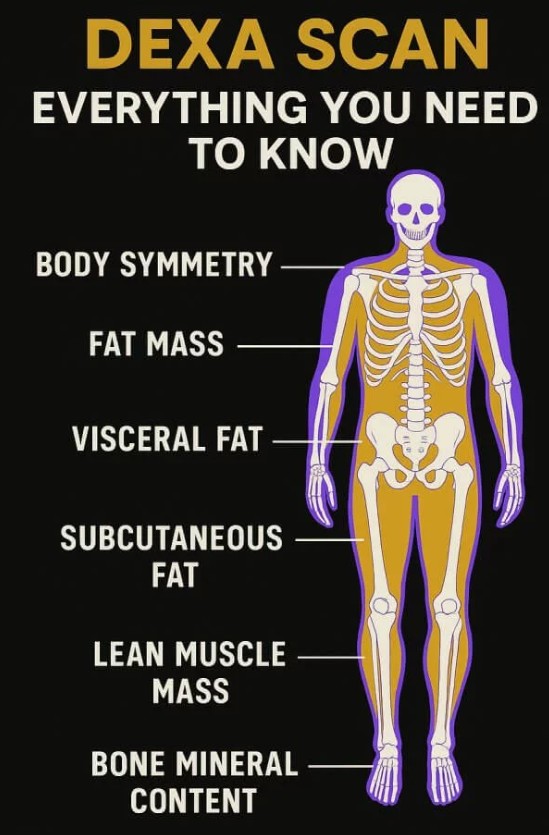
This is where a bathroom scale genuinely fails you. Two men can weigh the same number and have completely different compositions, one with healthy muscle mass and lower visceral fat, the other with declining muscle and rising visceral fat, even though the scale says nothing changed. If you want more than a number, a DEXA body composition scan gives you a clinical read on what is actually happening: fat, lean muscle, and bone density, broken out with real precision. That kind of data turns a vague feeling of “something is off” into an actual baseline you can track over time.
Understanding this connection matters because it reframes the conversation. Low testosterone is not just about how you feel; it is measurably changing your body’s structure. That is useful information, and it is the kind of information that should guide any treatment decision rather than symptoms alone.
How GenAge Center Approaches Andropause in Ada
At the GenAge Center, we are a physician-directed longevity and wellness practice based in Ada, and our approach to andropause starts with data, not assumptions. Dr. Hyung T. Kim, MD, leads our hormone optimization work, and the philosophy here is straightforward: symptoms point you in a direction, but lab values and body composition data confirm the diagnosis and guide the plan. We do not treat a number on a page, and we do not treat a feeling in isolation. We look at both together.
A visit typically starts with a lab draw and a DEXA scan on our Hologic system to establish an objective baseline of your muscle, fat, and bone composition. Labs include a metabolic panel, a hormone panel, and a micronutrient panel. Once those labs are back, you meet with Dr. Kim to review what they show, since there is no meeting to discuss what is going on until the results are in. For men interested in how their metabolism and cardiovascular fitness factor into the picture, we also offer resting metabolic rate (RMR) testing and VO2 testing using our VO2 Master metabolic analyzer, which measures how efficiently your body uses oxygen during exertion.
If testing supports it, bioidentical hormone replacement therapy (BHRT) may be part of the plan. BHRT uses hormones that are structurally identical to what your body produces naturally, and at the GenAge Center it is always personalized, monitored, and adjusted based on follow-up labs rather than set on autopilot. We look ahead and keep patient safety at the forefront of every decision, which means regular reassessment, not a one-time prescription and a handshake. This is also why we offer both in-person visits at our Ada location and hybrid Zoom appointments, so men throughout Grand Rapids, Cascade, Forest Hills, and beyond can start the evaluation process without added friction.
Separating Real Signs From Normal Aging
One of the more honest conversations we have is about distinguishing andropause from ordinary aging, because not every symptom on that list above is automatically hormonal. Poor sleep, high stress, excess alcohol, and sedentary habits can all mimic low testosterone symptoms on their own. This is exactly why testing matters more than a symptom checklist: it is the only way to know whether you are dealing with a hormonal shift, a lifestyle factor, or some combination of both.
As curiosity around testosterone and andropause continues to grow, it is important to separate hype from evidence. Not every man with low energy needs hormone therapy, and not every man with a “low normal” lab value needs treatment either. The goal of a proper evaluation is clarity, giving you an honest answer about what is driving your symptoms so you are not guessing or, worse, spending money on treatments that were never going to address the actual cause.
Taking the Next Step
If andropause symptoms have been quietly shaping how you feel day to day, the most useful thing you can do is get real data rather than keep guessing. GenAge Center, located in Ada, MI, offers hormone testing, DEXA body composition scanning, and physician-directed BHRT for men navigating andropause throughout the Greater Grand Rapids area. Dr. Hyung T. Kim and our team can walk you through what your labs and body composition actually show, and what, if anything, makes sense as a next step.
To schedule an evaluation, call GenAge Center at 616-737-1710 or book a visit directly through our online scheduling page. In-person appointments are available at our Ada location, with hybrid Zoom options for patients who prefer or need a remote visit.
Frequently Asked Questions
What are the earliest signs of andropause in men?
Early andropause symptoms often include persistent fatigue, reduced motivation, changes in sleep quality, and a gradual decline in muscle tone or strength. These changes tend to appear slowly, which is why many men attribute them to stress or normal aging before considering a hormonal cause.
How do I know if my symptoms are andropause or just normal aging?
The only reliable way to distinguish the two is through hormone testing, since fatigue, mood changes, and weight shifts can stem from sleep, stress, or lifestyle factors as well as declining testosterone. A physician evaluation that includes lab work and, when appropriate, body composition testing gives a clearer answer than symptoms alone.
Where can I get tested for low testosterone near Ada, MI?
GenAge Center, located in Ada, MI, offers hormone testing along with DEXA body composition scanning for men throughout the Greater Grand Rapids area, including Cascade, Forest Hills, and Grand Rapids. Appointments are available in person or through hybrid Zoom visits.
Is bioidentical hormone replacement therapy safe for treating andropause?
BHRT uses hormones structurally identical to those the body naturally produces, and when it is physician-supervised with regular lab monitoring, it is generally considered a safe, personalized approach. Safety depends heavily on proper testing, dosing, and ongoing follow-up, which is why treatment should always be guided by a qualified provider rather than self-directed.
What does a DEXA scan show that a regular scale does not?
A DEXA scan provides a detailed breakdown of body fat, lean muscle mass, and bone density, rather than a single total-weight number. This matters for andropause specifically because low testosterone can shift body composition toward more visceral fat and less muscle even when overall weight stays the same.