
What Is GLP-1 Weight Management, and How Does It Work?
If you have tried to lose weight through diet and exercise alone, only to watch the scale barely budge, you are not imagining that something has changed in your body’s chemistry. Weight regulation gets more complicated with age, hormonal shifts, and metabolic slowdown, and willpower alone often cannot outwork biology. That is where GLP-1 weight management has entered the conversation, and for good reason. At the GenAge Center in Ada, MI, we field a lot of questions about these medications, and our answer is always the same: they can be a legitimate tool, but only when they are matched to the right person, monitored by a physician, and paired with a plan that looks at your whole metabolic picture, not just a number on a prescription pad.
This post is meant to walk you through what GLP-1 therapy actually is, who tends to be a reasonable candidate, and how we think about it differently at the GenAge Center. Our goal is not to sell you on a trend. It is to help you separate what the science supports from what the marketing implies, so you can make an informed decision with your provider.
What Is GLP-1 Weight Management, and How Does It Work?
GLP-1 stands for glucagon-like peptide-1, a hormone your gut naturally produces after you eat. It signals your pancreas to release insulin, slows how quickly food leaves your stomach, and sends a fullness signal to your brain. GLP-1 receptor agonists are medications designed to mimic that hormone at a stronger, more sustained level than your body produces on its own. That is the mechanism behind the appetite suppression and improved blood sugar regulation associated with this class of drugs.
For many people, the appeal is straightforward. Chronic hunger and constant food noise are exhausting, and they make sustainable weight loss feel almost impossible regardless of effort. By reducing appetite and slowing digestion, GLP-1 medications can make it easier to stick with a lower-calorie, nutrient-dense way of eating without feeling like you are white-knuckling every meal. That said, the medication itself is not the whole strategy. It creates a window of reduced hunger, and what you do inside that window, in terms of protein intake, activity, and muscle preservation, matters just as much as the prescription.
It is also worth being direct about something the marketing often glosses over: weight lost on GLP-1 therapy is not automatically fat loss. Without attention to nutrition and resistance training, a meaningful portion of that weight can come from lean muscle, which is the opposite of what you want for long-term metabolic health. This is one of the central reasons physician oversight and objective tracking matter so much with this category of treatment.
Who Is a Good Candidate for GLP-1 Therapy?
GLP-1 medications are not a universal fit, and a responsible provider should be evaluating more than your goal weight before considering a prescription. Candidacy typically depends on your metabolic labs, current health conditions, medication history, and how much of your weight challenge is being driven by appetite regulation versus other hormonal or lifestyle factors.
Generally, GLP-1 therapy is worth discussing with your physician if:
- You have a clinically elevated body mass index or weight-related health risks such as insulin resistance, prediabetes, or elevated blood pressure.
- You have made consistent efforts with nutrition and activity but continue to struggle with persistent hunger or plateaued results.
- You do not have a personal or family history of certain thyroid conditions or pancreatic concerns that your provider would screen for.
- You are prepared to pair the medication with nutrition coaching and strength-supportive activity rather than using it in isolation.
None of this is meant to gatekeep the conversation. It is meant to underscore that GLP-1 weight management works best as part of a monitored, individualized plan, not as a standalone fix. A thorough intake, lab work, and an honest conversation about your health history should always come before a prescription, regardless of where you seek care.
How GenAge Center Approaches GLP-1 Weight Management in Ada
At the GenAge Center, GLP-1 weight management is one piece of a broader clinical weight and metabolism strategy, not a shortcut we hand out without context. Dr. Hyung T. Kim, MD, leads care with a philosophy rooted in longevity medicine: the goal is not simply a lower number on the scale, but a healthier ratio of fat to muscle, better metabolic markers, and a plan you can sustain. As a physician-directed practice serving Ada and the greater Grand Rapids area, we build GLP-1 candidacy decisions around your labs, your hormone status, and your existing body composition, not around a generic protocol.
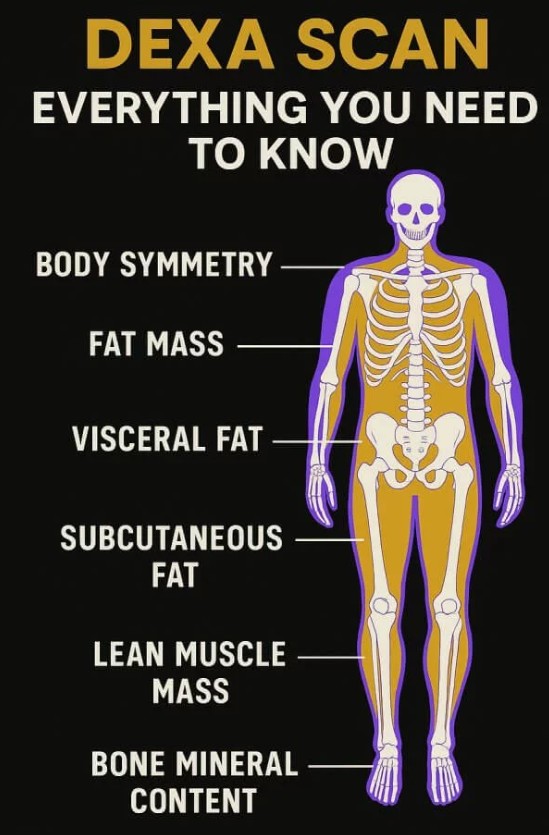
That is where our diagnostic tools come in. We use DEXA body composition scanning, a low-dose imaging scan that separates your weight into fat mass, lean muscle mass, and bone density, on a Hologic system to establish a true baseline before any treatment begins. We also offer resting metabolic rate (RMR) testing and VO2 testing through the VO2 Master metabolic analyzer, which give us objective data on how your body burns energy at rest and during exertion. For patients whose weight struggles are intertwined with perimenopause, menopause, or andropause, we also evaluate hormone optimization and bioidentical hormone replacement therapy (BHRT) as part of the full picture, since hormonal shifts can directly affect appetite, fat distribution, and muscle retention.
A visit built around GLP-1 weight management at our Ada practice typically starts with this kind of data gathering, followed by a candid conversation about whether the medication fits your specific physiology and goals. We also offer hybrid Zoom appointments for patients who cannot easily get to our Ada office, including those we work with outside West Michigan, though the initial diagnostic work is generally done in person. Throughout, the emphasis stays on physician oversight and personalization rather than a one-size-fits-all prescription pathway.
Beyond the Prescription: Tracking Real Change with Body Composition
One of the most common frustrations we hear about weight loss in general, GLP-1 assisted or not, is that the scale does not tell the full story. Two people can lose the same twenty pounds and have completely different outcomes: one preserved muscle and lost primarily visceral fat, the deeper abdominal fat that surrounds your organs and is linked to metabolic risk, while the other lost a concerning amount of lean tissue along with it. You cannot tell the difference by stepping on a bathroom scale.
This is why we lean so heavily on DEXA scanning throughout a GLP-1 weight management plan, not just at the start. Rescanning at intervals lets you and your provider see, in measurable terms, whether the plan is preserving muscle and reducing fat, or whether adjustments to protein intake, resistance training, or dosing need to happen. For patients in Ada and surrounding communities like Cascade and East Grand Rapids who are investing time and effort into a weight management plan, that kind of objective feedback tends to be far more motivating and more clinically useful than watching a single number move up or down.
Combining GLP-1 therapy with this level of tracking is, in our view, the responsible way to approach it. The medication can help quiet appetite and support adherence, but the data is what confirms whether the underlying goal, a healthier body composition and better metabolic markers, is actually being achieved.
Talk to GenAge Center About GLP-1 Weight Management in Ada
If you have been wondering whether GLP-1 weight management could be part of your health plan, the next right step is a conversation grounded in your own labs and history, not a generic online quiz. GenAge Center in Ada, MI, offers physician-directed evaluation that combines GLP-1 candidacy assessment with objective tools like DEXA body composition scanning, so you can make this decision with real data behind it. Call us at 616-737-1710 or use our online booking to schedule a visit and find out whether this approach fits where you are right now.
Frequently Asked Questions
What is GLP-1 weight management and how is it different from regular dieting?
GLP-1 weight management uses medications that mimic a naturally occurring gut hormone to reduce appetite, slow digestion, and improve blood sugar regulation. Unlike diet changes alone, it works on the hormonal signals that drive hunger, which can make calorie reduction feel more sustainable for some people, though it still requires nutrition and lifestyle support to be effective long term.
Is GLP-1 weight management safe for everyone?
No single treatment is right for every person, and GLP-1 therapy requires a physician review of your health history, current medications, and lab work before it is considered appropriate. Certain personal or family medical histories can rule it out, which is why a thorough intake and physician oversight matter.
Where can I find GLP-1 weight management near Ada, MI?
GenAge Center, located in Ada, MI, offers physician-directed GLP-1 weight management evaluations alongside diagnostic tools like DEXA body composition scanning for patients throughout the Grand Rapids area. Appointments can be scheduled in person or through hybrid Zoom options depending on your needs.
Will GLP-1 medication cause me to lose muscle along with fat?
It is possible to lose lean muscle mass during any significant weight loss, including weight loss supported by GLP-1 medication, if nutrition and resistance activity are not addressed. This is why tracking body composition with tools like a DEXA scan is important throughout treatment, not just at the beginning.
How do I know if I’m a good candidate for GLP-1 therapy?
Good candidacy generally depends on factors like your weight-related health risks, prior efforts with nutrition and exercise, and your overall metabolic and hormonal profile. A physician evaluation, including lab work and a review of your health history, is the appropriate way to determine whether this treatment fits your situation.